
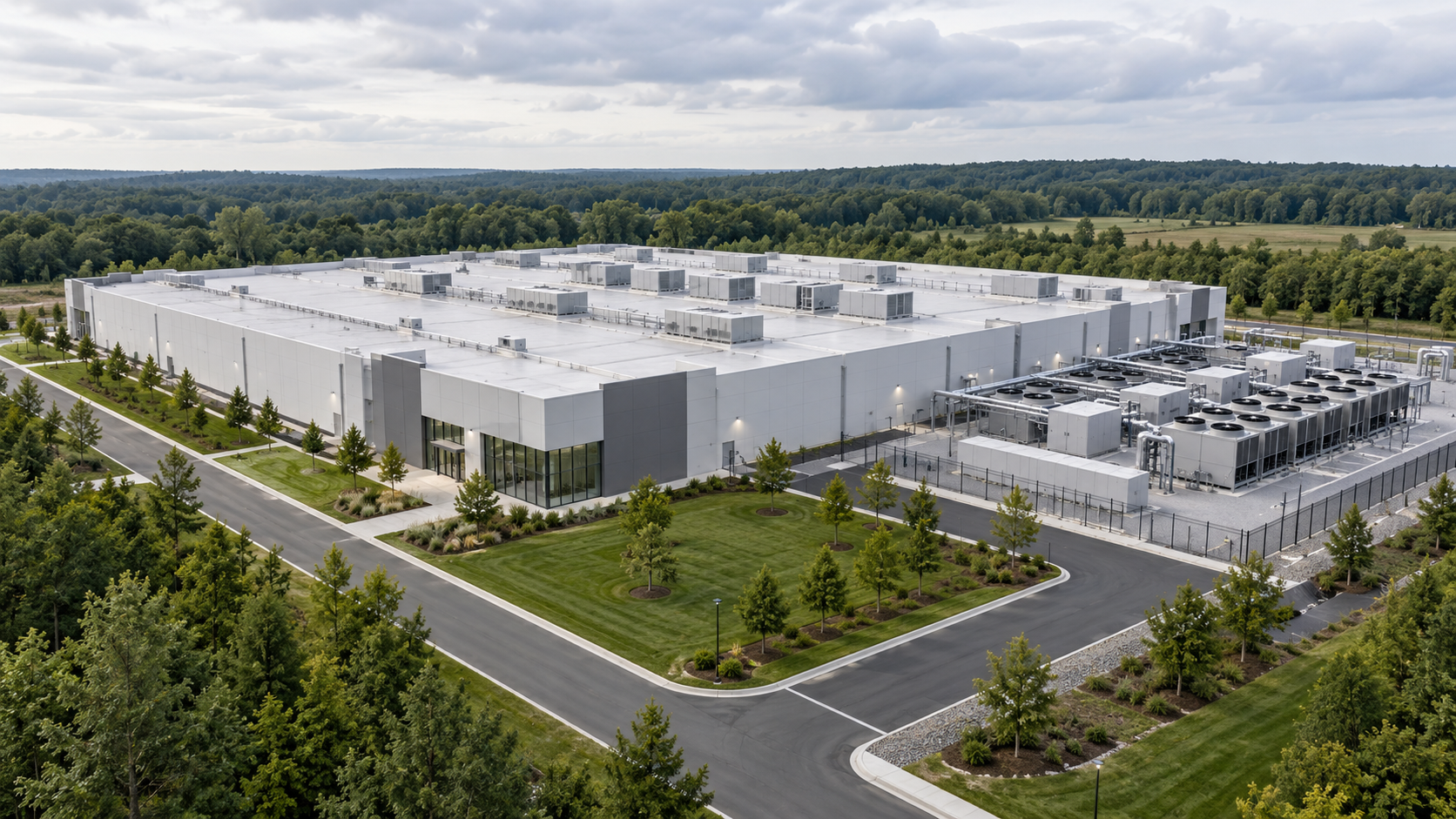
A data center is a building, or part of a building, designed to house computing equipment and the infrastructure that keeps it operating. Servers perform work, storage systems hold information, and network equipment moves that information between machines and users. The building provides power, cooling, connectivity, security, and space for maintenance.
For an owner, the useful distinction is between the computing load and the facility supporting it. A server purchase does not include the entire power path, cooling plant, or operating team. Similarly, an empty industrial shell is not a functioning data center simply because racks can fit inside it. Each layer has to support the intended workload.
Consider a company moving its business applications into a new facility. Its technology team may specify racks and connections, while the development team evaluates utility service, equipment yards, delivery routes, and permits. Those groups need a common capacity schedule. Otherwise, the building can be ready while the electrical service or rack connections remain unfinished.
Start planning with four questions: who will use the facility, what equipment will they install, how much interruption can their applications tolerate, and when must each phase operate? Translate those answers into an owner’s requirements document before selecting a site or mechanical system.
A strong project definition also names the party responsible for commissioning, day-to-day operation, and future equipment replacement. Those responsibilities shape rooms, access routes, contracts, and staffing long before the first server arrives.